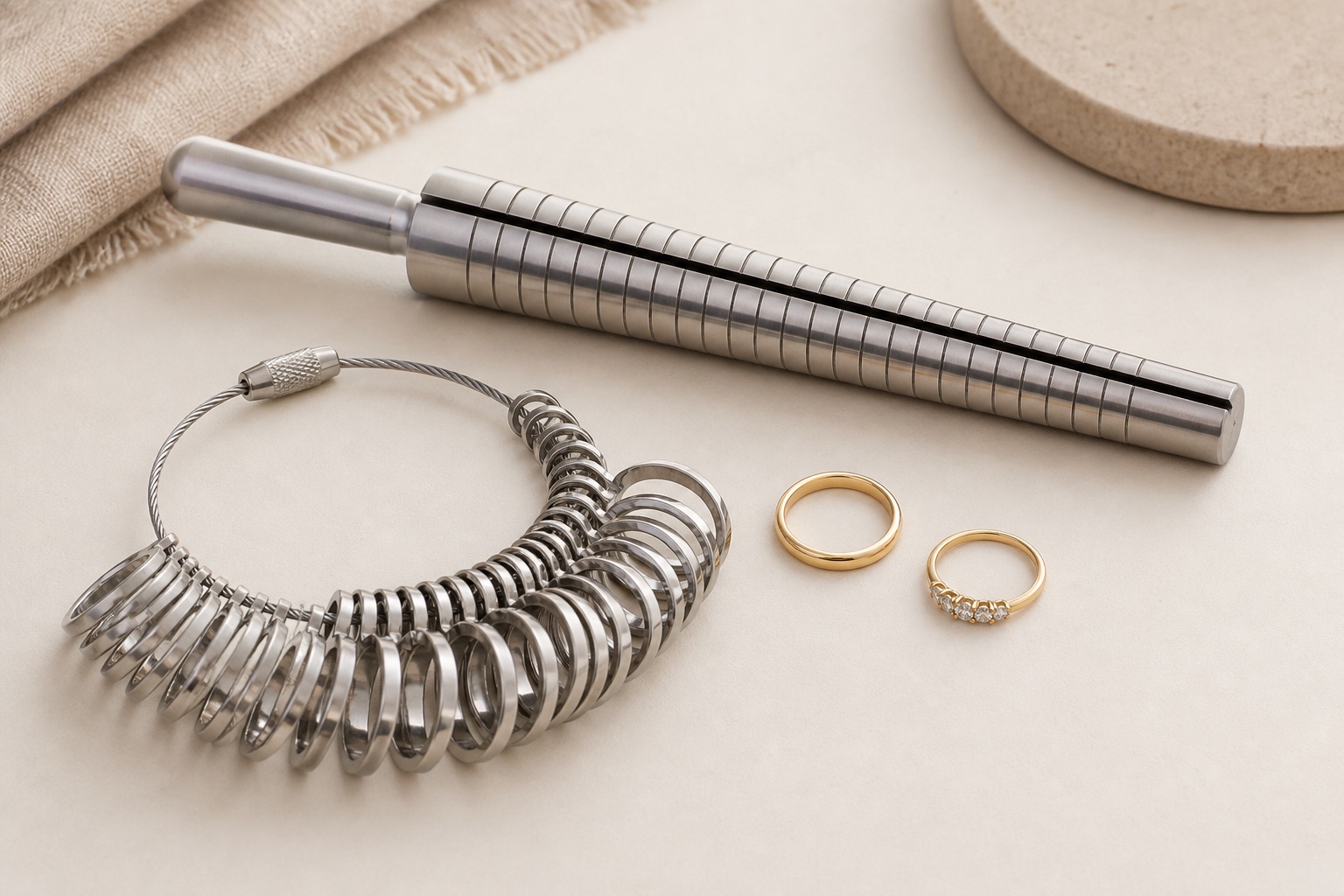
A good ring size should feel secure without being difficult to remove. Because hands change slightly with temperature, activity and time of day, one quick measurement is rarely enough for an important purchase.
Measure at a normal time of day
Measure when hands are comfortable and close to their usual temperature. Cold fingers can read smaller, while heat, exercise and travel can temporarily increase finger size. Taking two or three measurements on different days gives a more useful result.
Method one: measure a ring that already fits
Choose a ring worn on the same finger and hand. Measure the inside diameter across the widest point, without including the metal edges. Compare that measurement with the size chart supplied for the product. Small differences matter, so use a precise ruler or caliper if available.
Method two: measure the finger
A dedicated ring sizer is the most reliable at-home tool. If using a printable guide, confirm that the document is printed at 100 percent scale. String and paper can stretch, twist or compress, so treat those methods as a preliminary estimate rather than a final answer.
Account for band width and shape
Wide bands cover more of the finger and may feel tighter than a narrow band in the same nominal size. Rounded comfort-fit interiors can also feel different from flat interiors. Review the product’s width and sizing notes before deciding.
Measure the correct hand
The same finger can differ between the left and right hand. Measure the exact finger that will wear the ring. If the knuckle is noticeably wider than the base of the finger, choose a size that can pass the knuckle while remaining reasonably secure below it.
If the ring is a surprise
Borrowing a correctly fitting ring for measurement can work if you know which finger it is worn on. A trusted friend or family member may also help. Avoid guessing from height, shoe size or general hand appearance; those details do not provide a dependable ring size.
Before placing the order
Check the product’s available sizes and whether the design can be resized after production. Personalized and stone-set bands may have different limitations. If your measurements fall between sizes, contact a Juelvia jewelry specialist with the inside diameter, finger measurement and the product link for more focused guidance.
Once the size is confirmed, compare engagement rings and wedding rings with greater confidence.
Couple rings: record two sizes, not one
Choosing couple rings starts with two separate fitting checks. Record each person’s intended hand and finger, measured size and preferred band width. A matching finish does not mean the two wearers need matching sizes or widths.
Before ordering, check how the product records the pair. Some listings show a combined width option, such as 8 mm/4 mm, alongside the size controls. The width is not the finger size. If there is only one size field, ask how to supply the second wearer’s size instead of assuming the same selection applies to both.
Use these designs to compare the questions you need answered:
- Black and rose-gold grooved band pair: compare the 4 mm and 8 mm widths, then choose the pair or single-ring option deliberately.
- Galaxy sandstone band pair: compare the domed profile with the grooved design and record each wearer’s size.
- Hexagon-center ring and inlay band: compare a stone-set ring with a wider band instead of expecting two identical rings.
For engraving, label the text “Ring A” and “Ring B” with the corresponding sizes. Confirm spelling, character limits and whether each ring can be resized before approving the order.